





2022 saw double-digit growth in cash flows sent by residents EU to non-EU countries, which mainly include personal transfers sent by migrants to households in their home country. In particular, their volume amounted to 43.5 billion euros, which is 14% more than 38.2 billion euros in 2021.
Fund inflows into the EU amounted to €13.5 billion, up 10% from €12.4 billion in 2021.
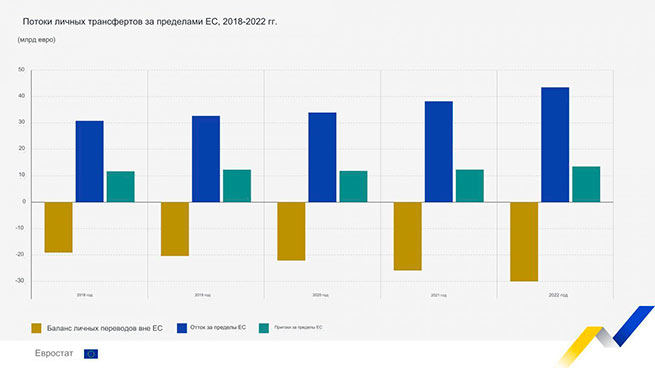
In recent years there has been a significant increase in outflows of funds outside the EU, especially in the last five years. Since 2018, outflows have increased by 41%, while inflows have shown more modest growth, increasing by just 15%. As a result, the EU’s negative balance against non-EU countries increases, reaching €30.0 billion.
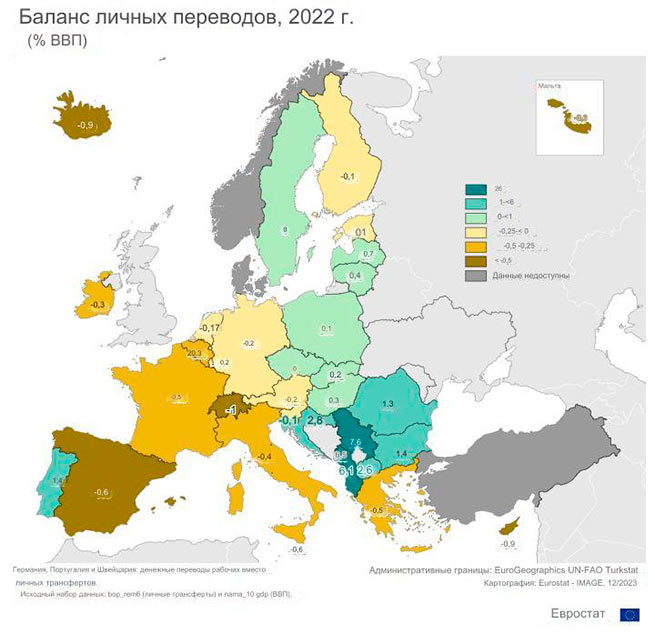
In 2022, in 9 EU countries, private transfers operated at a surplus as receipts exceeded dispatches. Among these countries, 4 reported surpluses of more than 1% of their respective gross domestic product (GDP): Croatia (2.8% of GDP), Bulgaria (1.4%), Portugal (1.4%) and Romania (1. 3%).
In contrast, Cyprus (-0.9%), Malta and Spain (-0.6%) had the largest personal transfer deficits compared to other countries as a percentage of their respective GDP. The deficit for Greece was 0.5% as outflows exceeded inflows.

More Stories
Greece is at the bottom of the EU in information and communication technologies
Real wages in Greece fell by 30%
ELSTAT: inflation increased by another 3.2% in March